
The season of Advent begins a new liturgical year, inviting one to repeat the cycle of following the life of Jesus for yet another year. As followers of Jesus, we live our lives on the calendar of Advent through Pentecost. The color of this season is the color blue, the color of hope, signifying that Jesus is our hope and the hope of the world! It makes sense, that at the beginning of the new liturgical year, we begin with the birth of our Savior–“O Come, O Come, Emanuel.” We spend four weeks preparing as we don’t want to miss the birth, nor miss the significance of the life-giving gift.
What is more difficult to understand is why we always start the season with an apocalyptic text. Why does the church start with talking about the end of things, the consummation, or finality of Jesus’ kingdom, before we even have its inauguration? Maybe it’s analogous to knowing the final score of a football or basketball game before you sit down to watch it. When the church talks about the consummation of God’s creation, the final score of the “Kingdom of God Game” we’re playing, we win! Yea! Team Jesus! Maybe that’s why the Church begins the season of Advent with telling you the final score and exhorts you not to fall asleep on the couch, but rather, “Keep Awake!” “Keep Awake!” because we don’t know the hour this will happen.
That’s all very traditional, but I have several problems. My problems begin with how the gospel writers chose to use apocalyptic language and apocalyptic metaphors to talk about the final consummation. While I agree with the gospel writers final score (Team Jesus wins!) I wish they had not used apocalyptic language and metaphors to communicate their beliefs about the consummation of God’s creation. Why don’t I like apocalyptic language and metaphors even though it was a popular worldview in Jesus’ day?
First, because I don’t find it in the historical Jesus’ teaching. Second, and related, apocalyptic language and metaphors, give us permission to be passive, and sit on the sideline, or sit on the couch, and wait. It says, “Don’t worry God will invade the world and fix it, Jesus will come again (return) and make all things right.” If God and Jesus are going to do that, it leaves them playing the game on the field, and the rest of us as spectators. Third, apocalyptic language and metaphors have caused nothing but problems: false predictions of Jesus’ return, second coming cults, bad geo-political decisions, and Christian escapism. We just need to “Keep Awake,” and be expectant, and wait for God to take action. Like I said, I don’t think the historical Jesus had this worldview, nor does it square with his parables or teachings on the reign of God, the kingdom of God.
So, what are we to do with this apocalyptic language and metaphors that we find in our scriptures? The only thing I know to do, is to reinterpret them, in light of what we know about what Jesus taught, and how he lived. When we talk about the second coming of Jesus, I invite you to think about this in a new way. Rather than talk about this inside the apocalyptic worldview of the first century and its cosmology, which leaves God invading the world, and us passively watching for things to happen, maybe we can understand “second coming” language as some New Testament scholars propose. That the “second coming” can be understood to mean that, the same God who was present in Jesus, comes again, into our world, in us and through us. Can we dare to embrace the possibility that we ourselves might be the second coming of Christ? I think we can and should. As God worked through Christ, God continues to work through us.
When you study the life of the historical Jesus, he is consistent in creating a here and now reality, with a here and now theology. Jesus expected his disciples to follow him in creating this new reality. He called it the kingdom of God, and it was different than the kingdom of the Roman Emperor. Whose Reign would reign–the Emperor’s or God’s? Jesus was all about teaching and actively living the principles and passions of God and believed, with all his heart, that these passions and priorities of God would win. Jesus believed that the final consummation of God’s creation will be complete when these passions and priorities reign in the hearts and lives of all peoples. We have been working on it for 2000 years and we are not there yet.
I’m not sure about you, but I am not waiting for God to swoop in and save the day as an apocalyptic worldview suggests. This is where the season of Advent rises onto the horizon of our living. Advent is the season of Hope, but not hope that God will swoop in to clean up the world, rather hope that a Savior will be born to teach us how to be co-creators in kingdom living. The final consummation of God’s creation depends on each of us, doing the hard kingdom work we were designed to do.
What is the work that we need to do? We can find it clearly in our hopes and dreams we have for each other and the world. In the gap, between where we presently are, and where the Divine Spirit is beckoning us to be, are our hopes. Our hopes become our personal agendas for activism in the New Year before us. These hopes become are missional activity in the year to come–for many years to come!
So, how do we turn those hopes into reality? We don’t do it inside an apocalyptic worldview that waits and expects God to it, as we wait for the second coming. We turn those hopes into reality through the living of our lives, through lots of hard work, through each of us being the second coming of Christ. We cannot be passive, but rather active workers.
What Jesus inaugurated in his life, we try to complete in our life. We teach our children to do this work after we are no longer here.Teach them the kingdom principals of love, justice and peace. Teach them how to continue transforming the world as Jesus transformed the world.
God’s creation will be brought to consummation, and our hope lies in the life and teachings of Jesus, and each of us intentionally living his life today! Let us “Keep Awake” for Jesus’ birth, with expectant hearts, allowing Jesus to teach us the way of life and life abundant.
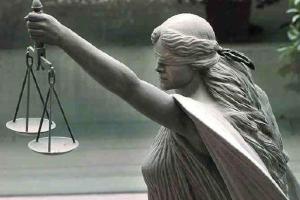 Court heard oral arguments in the case of Foster vs Chatman. The case is looking at racial profiling in selecting criminal trial juries. I would imagine it would be fair to say that both prosecutors and defense attorneys use racial profiling when selecting a jury. Should an attorney be allowed to remove someone from a jury (peremptory challenge) because of race? Do we want to use race to decide who is seated on a jury? I think not. I just want quality impartial people on juries. I believe race should not play a part. We’ll see where and how the Supreme Court rules and what guidance they offer. Looking at Lady Justice you notice she is blindfolded. Why not use that symbol to inform jury selection. Let’s “blindfold” the lawyers when they ask their questions to individual jurors during jury selection. Put the jurors in another room and the lawyers can ask questions via voice alone. The lawyers would never get to see the jurors. So that one could not profile from the sound of voice either, a stenographer could type the answers. The lawyers would only see the juror’s response to their question never hearing their voice; much can be profiled from grammar patters, dialect and language used. What would Lady Justice think of this idea? In a few months we’ll know what the Supreme Court decides.


 Monte's Blog